
Pengajian Ahad Pagi UMPO Emphasizes the Spirit of Self-Restraint and Piety
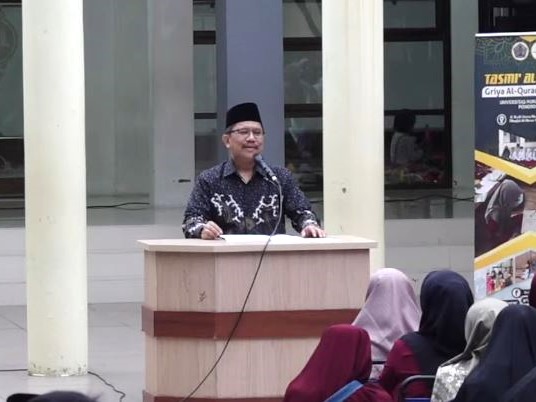
UMPO.AC.ID - A strong sense of religious devotion and academic enthusiasm marked the Sunday Morning Islamic Study organized by Universitas Muhammadiyah Ponorogo. This regular event, open to the general public, serves as a space for community gathering and spiritual enrichment. The session featured a lecture themed “The Rhetorical Messages of Fasting Verses” delivered by Dr. Agus Tricahyo M.A., Chair of the Muhammadiyah Regional Leadership of Madiun Regency, who attended in person at the UMPO campus to share enlightening insights with the congregation.
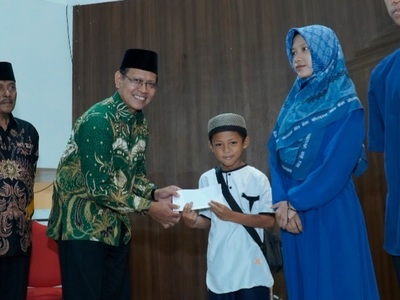
The event began with a report from the Student Zakat and Charity Movement (GIZMA), reflecting the congregation’s strong spirit of generosity. Cash waqf donations, mosque facility improvements, Ramadan iftar and suhoor contributions, and routine Sunday charity successfully raised funds to support the campus’s socio-religious programs. GIZMA volunteers also encouraged participation in the Ramadan Gift Program, providing care packages for BA/TPA Muhammadiyah teachers across Ponorogo Regency.
Entering the main session, Ustadz Agus Tricahyo opened his sermon by inviting the congregation to be grateful for the blessings of health and the consistency in attending religious study circles. He emphasized that every step taken toward the mosque in pursuit of knowledge is considered fisabilillah—a noble spiritual act rewarded as worship until one returns home.
In his lecture, Ustadz Agus highlighted the beauty of the Qur’an’s rhetoric in conveying the command to fast. According to him, the Qur’an does not always employ direct imperative forms but instead uses gentle, touching language that honors believers as devoted servants of God.
The fasting verse in Surah Al-Baqarah 2:183 begins with an honorable address, “O you who believe,” indicating that the command to fast is directed toward chosen individuals committed in faith. This approach, he explained, reflects divine rhetoric that builds awareness without pressure.
Furthermore, the phrase “as it was prescribed for those before you” serves as psychological reinforcement that fasting is a spiritual tradition observed by previous generations. This message fosters a sense of ease and historical solidarity in practicing religious obligations.
Ustadz Agus further explained that fasting (siyam) essentially means self-restraint. It is not merely abstaining from food and drink, but the ability to control impulses that weaken spiritual quality. This meaning aligns with the ultimate purpose of fasting—forming a pious character.
He also cited the Qur’anic use of the word shaum, which means refraining from speech, as illustrated in the story of Maryam. This example affirms that the essence of fasting is comprehensive self-control—over speech, emotions, and behavior.
“Self-restraint is the path to dignity. Without the ability to control oneself, a person cannot attain the rank of piety,” he affirmed.
This study session reflects Universitas Muhammadiyah Ponorogo’s commitment to promoting enlightening da’wah that encourages a balance between spiritual depth, intellectual growth, and character development. Through sustainable religious forums, the university continues to foster an academic atmosphere that is religious, inclusive, and progressive.
Syahdin Aprilia/Humas UMPO
Berita Terkait


Populer
Wisuda ke 60 Pascasarjana Sarjana dan Diploma Univ...
- 23 February 2026

Tiba di Malaysia, Mahasiswa KKN Internasional UMPO...
- 21 January 2026

Perkuat Kiprah Global, UMPO Berangkatkan 22 Mahasi...
- 15 January 2026
Hadapi Modus Kekerasan Era Digital, UMPO Perkuat S...
- 12 February 2026
Kategori
Berita Terakhir
Mengintip Serunya "Ramadan in Campus" Bare...
- 13 March 2026
Lima Peneliti UMPO Amankan Dana Hibah Penelitian M...
- 12 March 2026
Refleksi Penutupan Pesma Almanar UMPO: Mahasantri ...
- 11 March 2026
Raih Keberkahan Lailatul Qadr, Masjid Al Manar UMP...
- 10 March 2026
Pemerintah Larang Anak di Bawah 16 Tahun Bermedsos...
- 09 March 2026
Media Online

Pengumuman Terakhir
Link Terkait
Hubungi Kami
Telp. (0352) 481124, 487662 (psw 2211) - Fax : (0352) 461796
humas@umpo.ac.id , akademik@umpo.ac.id
2026 © All Rights Reserved. Universitas Muhammadiyah Ponorogo English